A tall ship does not become a useful history lesson simply because it looks old. Nor does a replica become uninteresting because its timber was cut recently. The valuable question is what the vessel allows us to understand, and how honestly its interpreters explain the evidence behind that understanding. An original ship can preserve physical clues that no reconstruction can reproduce. A new reconstruction can make space, scale, and working relationships comprehensible in ways that a fragile surviving object cannot. Those advantages deserve to be considered separately.
This guide offers a way to read historic ships without turning every visit into a contest over which vessel is the most authentic. It is a desk-based comparison of museum and public-agency accounts, followed by proposed observations that visitors can make for themselves. It does not report an inspection of any vessel or certify the accuracy of a reconstruction.
Start by asking what kind of claim is being made
The words original, restored, reconstructed, replica, and reproduction can appear together in visitor literature, but they do different jobs. Original usually identifies continuity with a historic object. Restored describes an intervention intended to recover or present an earlier condition. Replica identifies a newly made vessel representing an earlier design or ship. A display can also be a partial reconstruction: a section of deck, a cabin, or a hull shape built for interpretation rather than a complete sailing vessel.
None of those labels tells you everything about the quality of the work. A surviving ship may contain major replacements, and a replica may be supported by unusually rich plans, measurements, paintings, and written records. Ask which claim the organization is actually defending. Is the point that this particular hull carried a particular crew, that this arrangement represents a documented period, or that the vessel demonstrates the broad working principles of a type? Different claims require different evidence.
Provenance matters more than a dramatic silhouette
Provenance is the documented chain connecting an object with its history. On a ship, that can include ownership records, construction accounts, logbooks, photographs, repair reports, and measurements. A dramatic hull shape can make an immediate impression, but it cannot establish that chain on its own. A plaque giving a launch year is a beginning, not a complete explanation of everything standing in front of you.
A helpful visitor exercise is to separate three notes: what the interpreter says, what evidence supports it, and what you personally observed. For example, an interpreter may identify a compartment as an officers' space. A plan might support its location, while a surviving photograph supports the fittings. Your own observation concerns its dimensions and relationship to neighboring spaces. Keeping those notes apart prevents a plausible visual impression from quietly turning into an unsupported historical fact.
Friendship shows why a replica can be a serious research tool
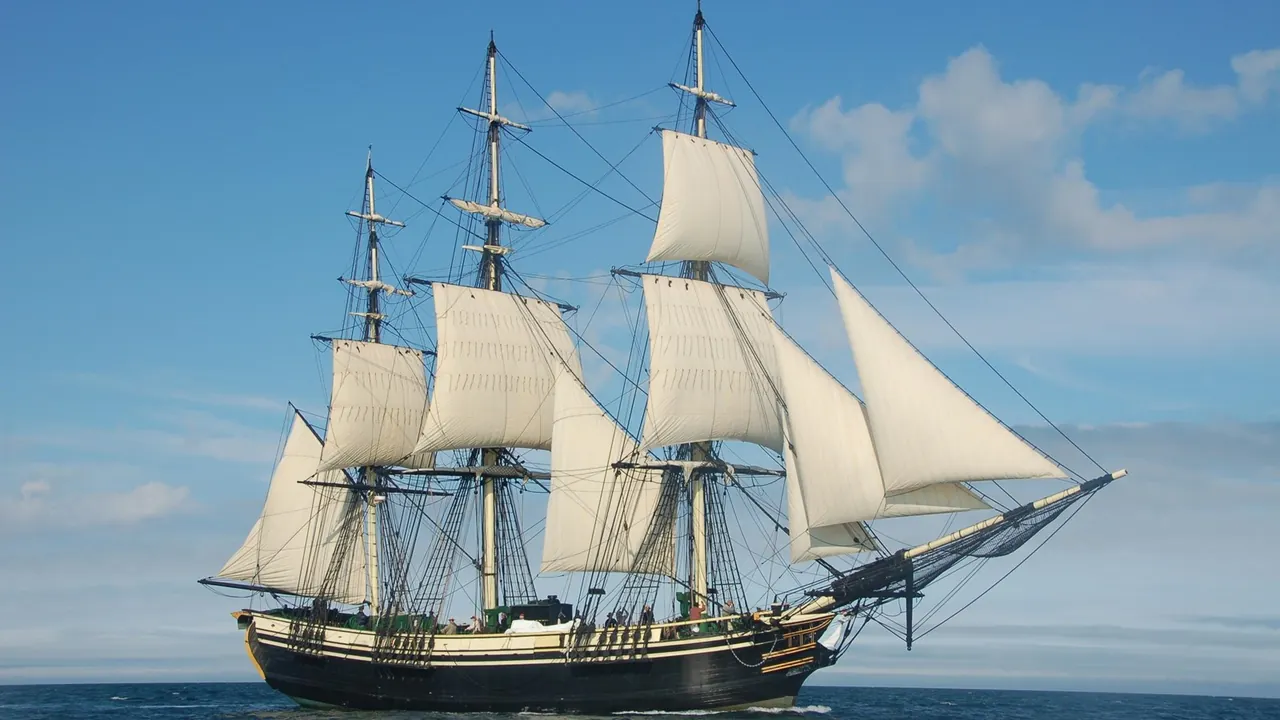
The National Park Service identifies Friendship of Salem explicitly as a replica of a Salem-built merchant vessel launched in 1797. The original made international trading voyages and was captured during the War of 1812. The modern vessel's keel was laid in 1996. NPS explains that the reconstruction draws on a contemporary model, paintings, and documents, including voyage logs, while incorporating modern materials and technology for present-day requirements.
That clear distinction is a strength. Visitors can ask what a full-sized representation reveals about moving cargo, organizing a deck, or living aboard a merchant ship, without imagining that the modern planks crossed the oceans in the eighteenth century. The vessel also invites a productive comparison between sources: does a painting agree with a model, and which details are actually documented? A responsible replica is a visible argument about the past, open to explanation and revision, rather than a substitute for explaining uncertainty.
Replacement wood does not automatically erase a ship's identity
Wooden vessels were repaired during their working lives. Maintenance after retirement adds further layers. The useful historical question is therefore rarely whether every component survives from launch day. Instead, ask how replacement was documented, which significant features remain, and whether later work preserved or obscured important evidence. A percentage without a clear definition can be more confusing than helpful: percentage by weight, volume, number of pieces, or visible surface could produce different answers.
The Navy's brief history of USS Constitution describes major restoration campaigns as part of the vessel's continuing history. That is a better starting point than treating replacement as a surprising secret. A ship's identity can involve physical fabric, documented continuity, institutional custody, and accumulated cultural meaning. Those dimensions do not cancel one another, but neither should they be collapsed into one easy authenticity score.
Charles W. Morgan makes the repair record visible
Mystic Seaport's account of restoring Charles W. Morgan describes documentation, structural surveying, and selective replacement rather than a simple cosmetic makeover. It explains that removed parts were recorded and retained for study, and estimates that 15–18 percent of the ship's fabric dates to its 1841 construction. That figure belongs to the museum's stated assessment; it is not a universal way to measure every historic ship.
The interpretive opportunity lies in the repair decisions. Visitors can explore why an apparently modest piece of timber may contain valuable construction information, while a prominent new component may be necessary to keep a structure coherent. A repair can remove one kind of evidence while generating another: records of measurements, tool marks, fastening patterns, or earlier alterations. Preserving the documentation helps future researchers understand what was changed and why, even when an original component can no longer remain in service.
Appearance, structure, and operation are different tests
A ship can look convincing from the quay while using arrangements that differ from its historical counterpart. Conversely, a vessel with obvious modern additions may retain an unusually informative hull or working rig. These are not reasons to dismiss it. They are reasons to ask what has been reproduced and what has been adapted. Safety equipment, visitor routes, and machinery can coexist with historical interpretation when their role is explained plainly.
Try asking one question about appearance, one about structure, and one about operation. What period does the paint scheme represent? Which surviving parts carry structural loads? Is this equipment used in the same manner that an earlier crew used it? The answers may reveal three different levels of confidence. Avoid assuming that a vessel that sails is automatically more historically exact than one that remains moored. Operating demands and preservation priorities can lead to different choices, and each institution needs to explain its own balance.
The people aboard belong in the authenticity discussion
A beautifully reconstructed cabin tells only part of a maritime story. Who was permitted to use it? Who cleaned it, cooked nearby, loaded the cargo, or had little choice about being aboard? A ship's working environment involved differences of authority, pay, opportunity, nationality, and social position. Treating every person as an interchangeable adventurous sailor removes much of what makes the vessel historically significant.
Look for interpretation that distinguishes documented individuals from representative roles. A named person supported by a crew list is different from a composite character used to explain a typical task. Both can help a visitor learn, provided the distinction remains visible. Ask whether the display connects the ship to communities ashore as well as people at sea. The NPS Maritime Heritage Program frames waterways through commerce, work, defense, traditions, and cultural identity; that wider lens helps prevent a ship visit from becoming only a study of attractive hardware.
Compare spaces before comparing claims of greatness
It is tempting to compare two ships by length, sail area, or the fame of their names. A more revealing comparison may be the relationship between a working space and a living space. How far would a crew member move between a berth, a meal, a duty station, and the weather deck? Which movements are possible in a modern visitor route, and which have been restricted? A carefully framed comparison turns scale into a question about ordinary work.
You do not need to touch historic surfaces or enter closed areas to make these observations. Use permitted viewing positions and ask for a plan when one is available. Note whether an apparent doorway is a historic opening, a later alteration, or a visitor entrance. These small distinctions help explain why a museum route cannot always be treated as a literal reconstruction of a sailor's daily movements. The route is also an interpretation designed for a different public.
Good questions are more useful than authenticity traps
Some visitors ask a guide whether a ship is real and expect a single decisive answer. A more productive conversation begins with a specific question. Which construction features are best documented? What part of the current presentation is least certain? Has the organization chosen one period from a longer working life? Are there photographs or drawings showing a different arrangement? Such questions invite an explanation instead of forcing a guide to defend an oversimplified label.
It is also reasonable to ask how the institution communicates corrections. A reconstruction based on incomplete evidence should be able to accommodate new findings. Look for dated research notes, conservation reports, or labels that acknowledge competing interpretations. Uncertainty does not necessarily indicate poor work. In historical interpretation, clearly identifying the edge of the evidence is often more informative than offering an elaborate answer that makes every detail sound equally secure.
Photographs are records of a presentation, too
Your photograph can document how a ship was presented on a particular visit. It does not automatically document how that ship looked throughout its working life. Modern equipment might be hidden outside the frame, a mast may be temporarily absent, or an exhibit may represent a selected year. Include the vessel's name, location, and date when sharing an image, and distinguish your photograph from an archival view. That simple context makes the image more useful to later readers.
If a striking photograph leads you toward a vessel, follow it with a visit to the custodian's own account. Look for the difference between a claim repeated in social media and one supported by a conservation record. The reward is a deeper kind of curiosity. You can enjoy the beauty of the ship while also seeing the decisions, compromises, and research that made the present encounter possible.
Choose the visit by the question you want to answer
An original vessel, a replica, and a partial reconstruction can all justify a visit, but they offer different kinds of access to the past. Someone interested in surviving construction evidence may prioritize a historic hull and its conservation documentation. Someone trying to understand the size of a vanished merchant ship may find a researched replica especially helpful. A family interested in the relationships between deck work, cargo, and living space may learn more from a clear guided interpretation than from a famous name alone.
The strongest visit ends with better questions. You should leave able to explain what is original, what has been replaced or reconstructed, what evidence supports the interpretation, and what remains uncertain. Those distinctions do not spoil the atmosphere of a tall ship. They give the atmosphere substance, allowing admiration to rest on something more durable than the impression that old-looking wood must contain the whole truth.