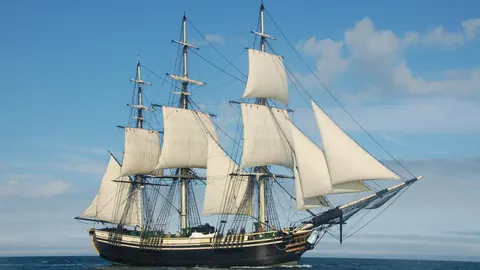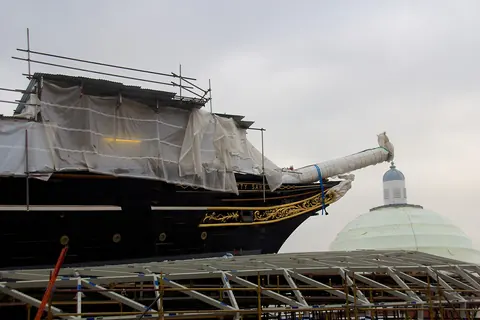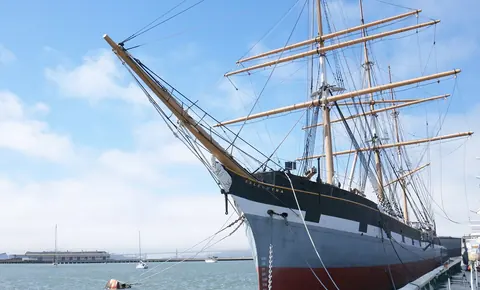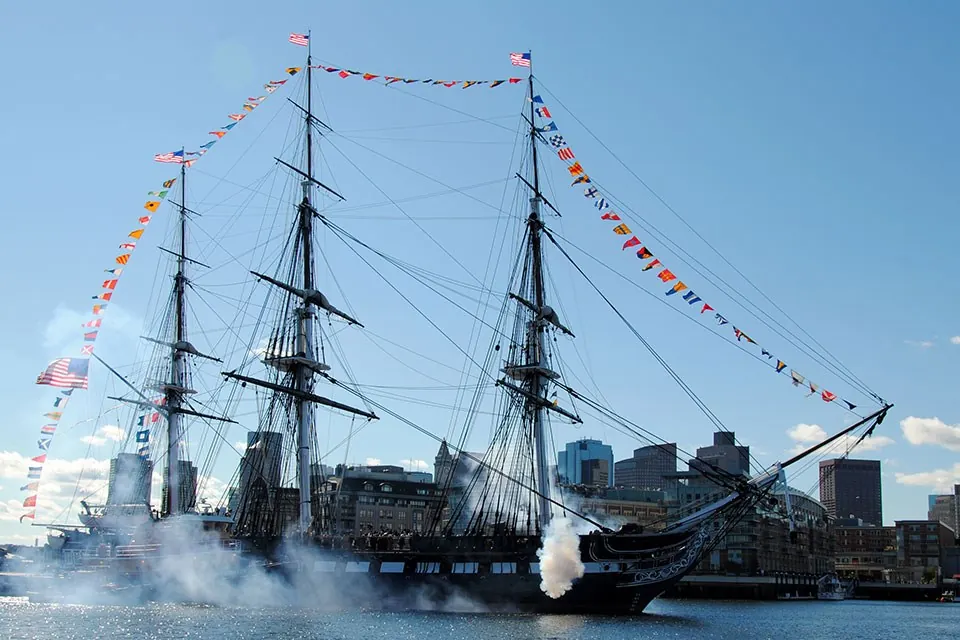
The international tall ships that gathered during Sail250 in 2026 made the waterfront a compelling place to look up. For a first-time visitor, the next step can be less obvious. Does visiting a tall ship mean walking along a pier, boarding for a short interpretation, joining a harbor sail, or becoming part of a working watch? Those experiences can share the same attractive photograph while involving very different expectations. Choosing between them begins with understanding the program rather than choosing the most dramatic silhouette.
This guide is a research-based planning framework, not a timetable or a recommendation to book a particular operator. It does not claim that the Colonial Navy project currently offers departures. Its practical examples concern published information from established organizations, and its checklists are suggestions for the questions a visitor can ask before committing time or money.
Understand what the Sail250 photograph represents
Sail Boston's Sail250 overview connects the 2026 gathering with the United States' 250th anniversary and an international fleet visiting several American ports. That context matters because a festival appearance is a temporary event, not evidence that every participating vessel is permanently available nearby. A ship can make a short port call, follow a professional training schedule, or return to a distant home port after the public festivities end.
When an image catches your attention, find the vessel's name and the date of the event before looking for a visit. Then consult the ship's operator or permanent custodian. Search results and shared photographs can outlast the visit they describe. A successful first encounter might be with a different local vessel whose public interpretation suits your interests better, rather than with the ship that happened to appear in the original photograph.
Separate dockside interpretation from a sailing trip
Tall Ships America distinguishes several types of public and educational programs, including dockside interpretation, daysails, overnight voyages, and sail training. The distinction is useful because being aboard does not necessarily mean getting underway. A dockside program can provide excellent access to a ship's story without the moving conditions, departure commitments, or longer duration associated with a voyage.
Write down the outcome you want before comparing offers. You might want to understand a historic gun deck, see how a working rig is organized, introduce children to maritime history, or spend several days learning as part of a crew. Those are different goals. If a listing says only experience the tall ships, look for the details that explain whether the ship moves, what interpretation is included, how long the activity lasts, and what participants are expected to do. Clear details make a modest program easier to evaluate than an impressive but vague promise.
Read participation requirements as part of the experience
A public tour and a training voyage place different demands on the visitor. Sail training may involve a structured learning program and participation in shipboard life, while a museum visit may concentrate on interpretation. Tall Ships America's explanation of sail training emphasizes learning through the ship and its environment, rather than treating the activity as a passive ride. That does not establish the content or suitability of any particular program.
Ask the provider to describe an ordinary day in concrete terms. Which tasks are optional? How is instruction organized? What is expected during quiet periods as well as exciting ones? Are sleeping arrangements relevant, and what does shared accommodation mean in practice? A useful answer identifies the program's actual structure. The aim is not to prove that you are adventurous enough for a demanding experience, but to choose an experience that matches your interests and needs.
Check the operator, not just the event organizer
A festival can coordinate docks, publicity, and a parade while individual vessels retain responsibility for their own public programs. A museum and a historic ship beside it can also be operated separately. That division is easy to miss when a search result lists them under one destination. Before sending a question or making a booking, identify the organization that actually controls the activity you want.
Use the operator's current page to verify the vessel's location, whether boarding is offered, and how updates are communicated. A ticket platform, tourism listing, or old event announcement may be useful for discovery, but it should not be the only evidence. Save the relevant contact details and the page describing the particular program. This is especially useful if a trip involves several sites: an opening time for a shoreside exhibition does not automatically establish the boarding hours of the adjacent ship.
Make accessibility questions specific
The word accessible needs a destination and an activity attached to it. Reaching a waterfront, entering a visitor center, boarding a ship's upper deck, and descending below decks are separate questions. The National Park Service's USS Constitution visit page, for example, identifies limited shipboard accessibility and notes that access to the top deck can depend on tide conditions. That is a vessel-specific example, not a rule for every tall ship.
Describe the actual route you need to use and ask about each part. Questions might concern step-free approaches, gangway gradients, seating, low overhead clearance, thresholds, and the availability of an alternative interpretation. A companion's ability to board does not establish another person's access. Written information is a starting point; the operator can explain current conditions. A well-matched shoreside or virtual experience can still provide substantial historical value if a particular shipboard route does not meet your needs.
Distinguish the museum from the ship
The USS Constitution Museum's accessibility information explicitly distinguishes its own facilities from the separately operated historic ship. This is a useful reminder to read a destination as a group of experiences rather than as one undifferentiated attraction. A museum can offer seating, exhibits, and interpretive context that a preserved ship cannot provide in the same form.
Consider pairing the two types of learning. Before boarding, a plan or model can help you recognize parts of the vessel. Afterward, an exhibition can connect the physical spaces you saw with people, records, and events. For a group with different interests or access needs, splitting time between these options may work better than making everyone follow the same route. The important planning step is to establish what each site offers independently, without assuming that admission, hours, or facilities transfer from one organization to the other.
Verify current conditions close to the visit
Historic ships are not static rooms with unchanging entrances. Maintenance, operational commitments, tides, and weather can affect public access. The Navy's USS Constitution visitor information describes public access conditions and warns that visitation may change. Consult that current operator page for its own requirements rather than relying on a general article's summary of identity checks or opening hours.
For any vessel, build a final confirmation step into your plan. Check for a current notice before leaving home, especially if the ship is the principal reason for a long journey. Have a nearby alternative that does not depend on boarding the same vessel. A waterfront walk, maritime exhibition, or library collection may provide another way to explore the subject. That flexibility supports a better visit without turning a change of access into a failed day.
Choose a small observation goal once aboard
A first visit can feel visually crowded: ropes cross overhead, labels compete with the view, and unfamiliar names make it difficult to decide where to look. Choose one modest question instead of trying to memorize the whole ship. You could follow the relationship between a mast and the spaces around its foot, compare a working area with a living compartment, or look for the route by which cargo once moved through the vessel.
Keep the exercise within permitted visitor areas and ask before touching equipment. A rope that looks like a convenient handhold may have another purpose, and a closed compartment is not a challenge to investigate. Guides can often explain why a feature matters more clearly when the question is specific. Even ten minutes spent understanding one relationship can create a stronger memory than collecting twenty new nautical terms without any connection between them.
Prepare questions that a guide can actually answer
Useful questions invite an explanation supported by the ship in front of you. What task was performed in this space? Which part is original, and which is a later replacement? What would a visitor not be able to tell from the view on deck? Why does the current arrangement represent one period rather than another? A good answer can connect visible details with documents and interpretation.
Avoid turning the encounter into a quiz in which a guide must defend an unfamiliar statistic copied from the internet. If you have found a conflicting claim, explain the source and ask how the institution interprets it. Allow room for uncertainty. A guide who identifies the limits of the evidence may be giving a more reliable answer than one that assigns a confident story to every object. Record names and references so that you can follow up afterward.
Use photographs to support observation
A wide view records the overall setting; a carefully chosen detail can preserve the question you were trying to answer. Include a permitted photograph of the interpretive label when useful, or write the vessel's name and visit date in a note. Later, you will be able to distinguish your own observation from a caption attached to somebody else's image. Respect the operator's rules and other visitors' privacy.
Do not assume that a photograph captures the whole historical arrangement. Modern visitor routes, temporary maintenance, stored equipment, and a particular camera angle all influence the image. When sharing a picture, identify whether it shows an original historic vessel, a replica, or an interpretive reconstruction. Accurate context does more for public understanding than an exaggerated claim that viewers are seeing an unchanged scene from centuries ago.
Decide whether to take the next step
After a dockside visit, some people want more practical participation; others discover that archives, models, or museum collections are their real interest. Neither response is a lesser result. A useful next step follows the question that remained unanswered. Someone interested in the labor of sail handling might investigate a structured program. Someone intrigued by construction could look for a conservation talk. A visitor drawn to the crew's lives might begin with a logbook or oral history collection.
Compare specific programs using the same clear framework: purpose, operator, participation, access, duration, and current conditions. Read the provider's own information before committing. The best first tall-ship visit is not necessarily the longest or most physically demanding. It is the one that gives you a reliable understanding of what you are encountering, respects the realities of the vessel, and leaves you curious enough to continue learning after the waterfront photographs have been put away.