A newly painted wooden ship can look as though its preservation problem has been solved. The hull presents a clear outline, the colors recover their contrast, and photographs announce a satisfying transformation. Yet the appearance tells only a small part of the story. The demanding decisions may concern timber that nobody sees, a connection that carries a load, a repair record stored ashore, or the next inspection rather than the last public celebration. The paint is visible; the preservation system is not.
This article explains how to think about that less visible work. It compares published museum and public-agency examples and develops questions for readers who want to understand a project or support it responsibly. It is not a technical repair manual, a condition survey, or a claim that the Editorial Desk has inspected the vessels discussed. Real conservation decisions belong to the specialists and custodians responsible for the individual ship.
Begin with what the ship is being preserved to do
A vessel kept afloat as a public exhibit, a working sail-training ship, and a hull preserved out of the water may face different constraints. Their audiences, inspection regimes, access routes, and acceptable interventions need not be identical. Before judging a project by its appearance, ask what the custodian intends the ship to do and what historical qualities the project aims to retain.
This purpose shapes the questions that follow. A component significant for its tool marks may be valuable even when it cannot remain in a working structural role. A replacement intended for operation must meet demands that do not arise for a display component. The public does not need to become a naval architect to understand that difference. It does need a clear explanation from the organization, because the word restoration alone does not identify the intended outcome or the compromises involved.
Documentation is preservation work
Before a component is moved, it may hold information about construction order, previous repairs, fastenings, and wear. Once removed, its relationship with neighboring pieces can be harder to reconstruct. Drawings, measurements, photographs, labels, and written observations make that relationship more recoverable. The record is not an administrative extra added after the interesting work; it is one of the products of the project.
The National Park Service's maritime preservation resources bring documentation guidance together with references for treatment and historic-vessel evaluation. For a visitor or donor, the practical lesson is to ask whether a project is recording what it changes. A compelling before-and-after photograph can demonstrate appearance, but a measured record can explain how the result was reached. Without that record, future researchers may be left guessing which details survived and which were decisions made during the latest campaign.
Structural questions can hide behind a sound-looking surface
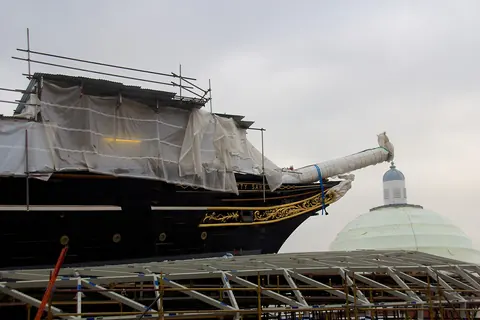
Wooden hulls are assemblies of interconnected parts. A visible plank is only one part of a system that also includes framing, fastenings, internal members, and the relationships between them. Surface appearance cannot establish the state of the whole assembly. Equally, an untidy surface during a project does not by itself show that the underlying work is poor. Opening an area for inspection can make a ship look worse while allowing its custodians to understand it better.
A non-specialist should avoid diagnosing a photograph. Instead, look for a project explanation that identifies what was examined, which decisions followed, and how the conclusions were reached. Does the account distinguish an observed condition from a possible cause? Does it explain why one repair was prioritized over another? These questions direct attention toward evidence and planning, rather than treating a coat of paint or a dramatic dismantling photograph as a complete verdict on the ship.
Charles W. Morgan illustrates selective replacement
Mystic Seaport's account of the Charles W. Morgan restoration describes a sequence involving documentation, surveying, and work on the structure below the waterline. It explains a philosophy of replacing as little as possible, with removed pieces carefully documented and retained for study. The account names several timber species used in the ship and distinguishes the work on framing from the work on interior and exterior planking.
Those details reveal why preservation cannot be reduced to making a vessel look complete. The sequence of opening, recording, replacing, and closing matters. So does the ability to explain why a piece was retained or renewed. The public-facing story becomes more credible when the custodian communicates the method, rather than simply presenting a dramatic result. This example is specific to the Morgan's documented campaign; it should not be treated as a specification for another hull.
Keeping a shape can require difficult choices
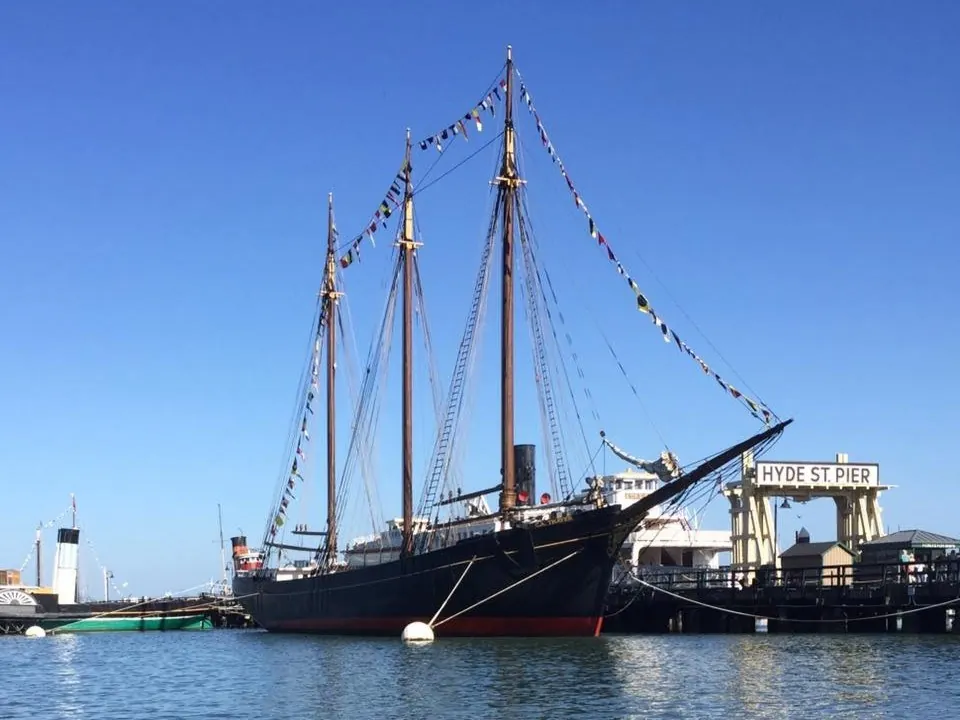
A historic vessel can change shape as its structure ages, and preserving its recognizable form may require substantial intervention. The National Park Service's history of C. A. Thayer describes the schooner's changing working careers and the major restoration that returned it to San Francisco in 2007. Its interpretation explains how structural deterioration had affected the vessel's curve and how restoration revealed information about its construction.
That creates a real interpretive tension. Retaining every surviving piece is not always compatible with preserving the overall assembly, while extensive replacement can change the physical evidence available for study. There is no useful universal answer hidden in a slogan. Readers should look for an explicit explanation of the chosen balance. What historical attributes were considered most important? What alternatives were evaluated? What information was recorded before intervention? Thoughtful answers are more informative than insisting that a ship must either remain entirely untouched or be made entirely new.
Timber is not simply a commodity ordered by the plank
Species, dimensions, grain, shape, seasoning, supply, and intended role all matter when discussing replacement material. Historic construction can require forms that do not resemble ordinary building lumber. A photograph of a stack of timber therefore tells little about whether the difficult procurement problem has been solved. Materials must suit a particular design and project, and that assessment requires specialist knowledge.
The USS Constitution Museum's discussion of the ship's wooden walls describes challenges in obtaining large solid timbers and shaped pieces for restoration. For a supporter, the useful inference is that material planning can begin long before a component becomes visible aboard ship. A project may need relationships with suppliers, space for storage, and a documented understanding of what will be required. These activities can look slow from outside while being central to the eventual result.
Preservation depends on people and transferable skill
A ship is not preserved by a material budget alone. Work also depends on people who can read the vessel, interpret records, plan an intervention, carry out specialized tasks, and explain their decisions. When knowledge exists only in one person's memory, the project acquires a vulnerability that cannot be seen in a photograph of the hull. Teaching and documentation help distribute that knowledge.
Ask how a preservation organization records methods, supervises work, and supports the next generation of practitioners. An attractive volunteer opportunity is not automatically an adequate training program, and enthusiasm is not a substitute for task-specific competence. At the same time, well-organized public engagement can help a community understand why the work matters. The strongest communication connects the craft to the historical evidence: not merely this person is skilled, but this decision preserves or reveals something important about the vessel.
The environment keeps working after the celebration
A relaunch or reopening is a milestone, not a permanent end to maintenance. A ship remains in a setting with water, weather, changing temperatures, visitors, and practical operating demands. Individual materials and sites respond differently, so a general article should not prescribe treatments. What can be assessed publicly is whether an organization has a continuing plan for observation and care.
Look for the difference between a completed capital project and recurring stewardship. Who checks the vessel afterward? How are observations recorded? What resources support routine work? A ship that attracts funding only when it appears to be in crisis can face a different future from one whose supporters understand the value of ordinary, repeated care. The less dramatic work may be exactly what allows the next generation to encounter the vessel without another emergency campaign.
Interpretation should reveal the repairs
Repair history can be one of the most interesting parts of a ship visit. A replaced component, a retained fragment, or a photograph of an opened hull can show how historical knowledge is made. Hiding every trace of intervention may encourage the mistaken impression that the whole vessel has survived unchanged. Explaining intervention gives visitors a richer understanding of continuity and change.
Good labels can distinguish original fabric, earlier repairs, and recent work without overwhelming the visitor. A simple plan showing where major campaigns occurred may be more useful than an unsupported percentage of originality. The museum's current account of Charles W. Morgan describes ongoing preservation as part of the vessel's public role. That framing helps connect the visitor's experience with the work required to make the experience possible, rather than treating conservation as an inconvenient interruption.
Judge a project by the clarity of its evidence
A useful public project account identifies the objective, the evidence, the intervention, and the remaining uncertainty. It does not have to publish every technical document to show that its decisions were reasoned. A concise explanation of why a particular area was opened or why a material was selected can be more convincing than a long collection of celebratory adjectives.
When considering support, ask what your contribution helps achieve. It might fund documentation, access, interpretation, or a specific phase of physical work. Be cautious about comparing projects solely by cost per foot of ship or by the speed of visible transformation. Two vessels of similar length may have radically different needs and histories. A fair comparison begins with their stated purposes and evidence, and acknowledges that a general reader cannot infer the whole technical problem from a few public images.
The most durable result includes knowledge
A successful preservation effort leaves more than a handsome ship. It can leave a better record of construction, a clearer understanding of earlier changes, skills passed to new practitioners, and a public able to explain why the vessel matters. Those results make physical work more meaningful and give future custodians a stronger starting point. They also help preserve value if circumstances later change.
Next time a restoration photograph catches your eye, look beyond the shine. Read the project account, identify the evidence, and ask what continuing care will follow. Admiration for the finished appearance is entirely compatible with curiosity about the hidden work. In fact, understanding that work makes the visible result more impressive: the ship is not simply wearing a fresh finish, but carrying the consequences of carefully documented choices about what the future should inherit.